
Two kinds of organisations exist in India’s development sector.
The first does extraordinary work and has a report that proves it. The second does equally extraordinary work and has a report that looks like it was assembled the night before the board meeting.
Funders can’t always visit your field sites. Donors can’t sit across from every beneficiary you have served. What they can do is read your annual report. And in those pages, they decide whether to trust you, fund you, or move on.
For NGOs, that decision affects renewals, grants, and credibility. For CSR teams, the report is proof that every rupee was spent with intent (not just filed away as a legal formality).
Done right, it is not a box you tick at the end of the financial year. It is a document that builds trust, proves impact, and gives someone a reason to pick up the phone and call you. That is exactly what this annual report design checklist for NGOs and CSR teams in India is built to help you create. See how EXPRESSIVE LIFE approaches annual report design for the development sector.
Let’s get into exactly what your report needs, and in what order.
What Makes an NGO or CSR Annual Report Truly Effective?
A strong report does more than present information. It helps people understand your work, trust your process, and connect with your impact in a meaningful way. Let’s break down the key elements of a strong NGO and CSR annual report.
Clear Structure
A well-organized NGO annual report format India makes it easy for readers to move through your report without confusion. From your vision to your outcomes, every section should follow a logical flow. When the structure is clear, your message becomes stronger and easier to remember. This is a key part of any effective annual report design for NGOs.
Visual Storytelling
Design is not just about how things look. It shapes how your story is experienced. A thoughtful nonprofit impact report design approach uses images, layouts, and visual elements to simplify information and highlight what matters. Strong visuals help readers quickly grasp your work without feeling overwhelmed.
Real Impact, Not Generic Claims
Generic statements do not build trust. What works is clarity and honesty. Focus on real outcomes, measurable results, and stories from the ground. This is what defines a powerful impact report for development sector in India. It shows not just what you planned, but what actually changed.
Consistent Branding
Consistency in fonts, colors, and tone gives your report a professional and cohesive feel. It reflects attention to detail and strengthens your identity. A consistent design approach is essential in any CSR annual report design process in India.
Getting these basics right is just the beginning. The real difference comes from how you apply them step by step. The CHECKLIST BELOW will guide you through the process.
Step-by-Step Annual Report Design Checklist for NGOs and CSR Teams
Most annual reports for Indian NGOs and CSR teams get made in a rush. The deadline arrives, someone pulls last year’s template, swaps the numbers, and sends it to print. The result looks like a report. But it does not work like one. A report that actually works is built section by section, decision by decision. This checklist covers every one of them.
#1. Define Your Purpose and Audience
Who is this report for?
Every NGO and CSR team has a different audience. A report built for international funders looks very different from one uploaded to the MCA portal for compliance. So, decide first, who is your primary reader? An individual donor? An institutional funder? A government body? Your board? That one audience should guide every design and content decision that follows.
Then lock your purpose. Is this a fundraising NGO annual report? Is a CSR annual report in India built for compliance? Or a brand-building document that makes your organisation stand out on a funder’s desk? Each purpose changes what you lead with.
Skip this conversation before you start, and your report will show it. A directionless document does not raise funds, does not build trust, and does not move anyone to act. It just gets filed.
#2. Plan a Clear Content Flow
The order information appears in a design decision, not an afterthought.
Readers do not read NGO annual reports like novels. They scan. They jump. But the best annual report layout for nonprofits still pulls readers through a logical arc, and that arc should feel intentional.
A content structure for an NGO ANNUAL REPORT that works:
- Leadership message that sets the tone.
- Organizational overview for first-time readers.
- Headline numbers and year achievements.
- Programme breakdowns and impact data.
- Human stories and beneficiary testimonials.
- Financial statements with clear summaries.
- Forward-looking close.
That structure moves from personal to programmatic, from emotional to evidential. The leadership message warms the reader. The financials prove accountability. The close leaves a door open. A 24-page report that is easy to follow will always do more than a 60-page document that loses the reader by page 12.
Flow matters more than word count. Every time.
#3. Focus on Impact Storytelling
Numbers tell funders what happened. Nonprofit impact stories tell them why it mattered.
“We EDUCATED 4,200 children” is a number. Introducing Kavita, a 12-year-old, pulled out of child labour, now the first in her family to read, is a STORY. The number gets forgotten by page THREE. Kavita does not.
This works because donors feel first, then decide. A statistic tells the brain. A story moves the heart. And moved hearts write cheques. A strong beneficiary impact story follows one simple structure, where the person was before your programme, what changed, and where they are today. Before, during, after.
Use their own words. The moment you paraphrase a beneficiary testimonial into formal language, the realness disappears. Readers feel that shift immediately. Aim for two to three case studies in your NGO’s annual report. Real names. Real photographs. Real outcomes. Readers always know the difference between a genuine field story and a polished summary.
#4. Use Data That Is Easy to Understand
Data visualization in NGO reports is not decoration. It is comprehension.
Most teams collect programme data carefully, then bury it inside a 12-column table in 8pt font. Nobody reads it. The work happened. The communication did not.
The rule is simple: every important number deserves a visual form. Not a paragraph. Not a table. A visual.
- Beneficiaries across states? Build a map.
- Year-on-year growth? A clean bar chart.
- Fund utilisation in CSR reports? A pie chart, not a ledger.
Give your biggest numbers their own space on the page. A stat like “14,000 women trained in financial literacy across 6 districts” should not hide inside a sentence. Feature it boldly.
Three things to always remember: keep labels readable, use one consistent colour scheme throughout, and always include units. “₹2.3 crore” and “2.3 crore beneficiaries” are very different things. For impact data presentation for nonprofits done right, see our annual report design work.
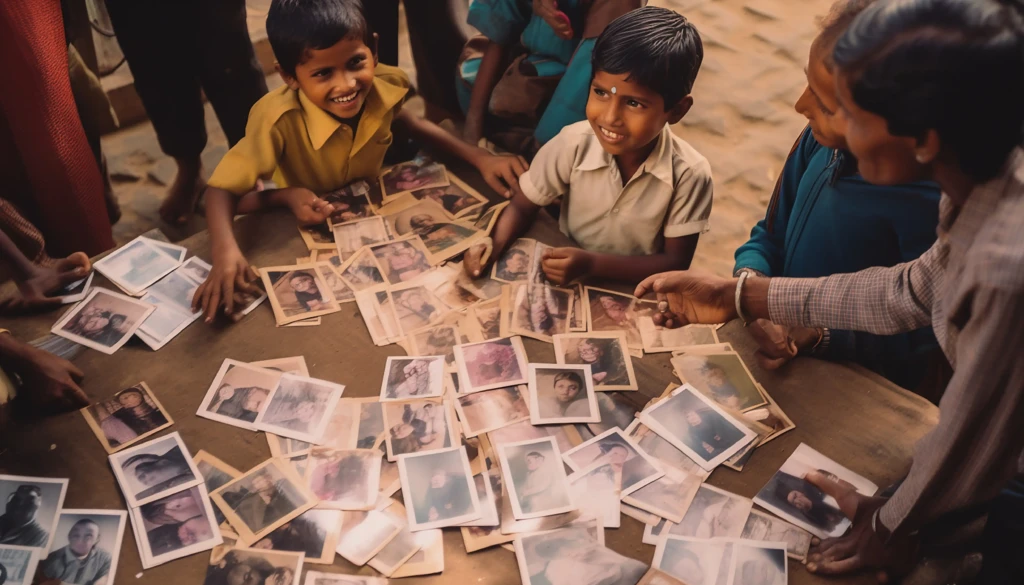
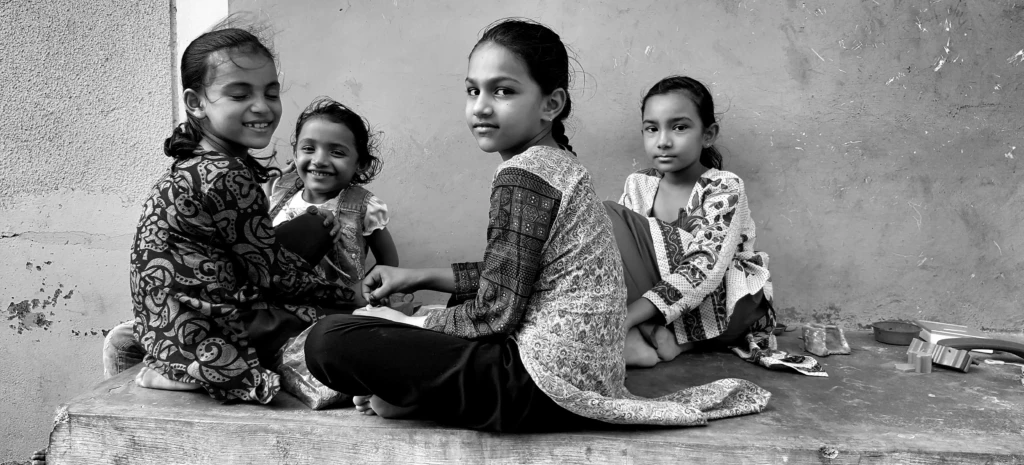
#5. Use Strong, Authentic Visuals
A report built on stock photography communicates nothing.
When a reader sees a generic handshake image or a staged photo from a free image site, credibility drops instantly. Stock images send one quiet message: this organization never went to the field. No NGO or CSR team can afford that signal.
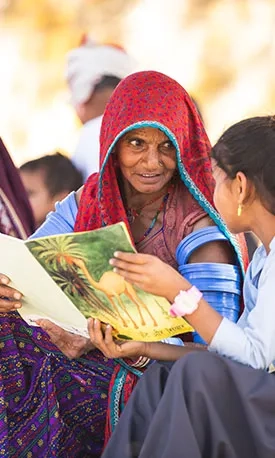
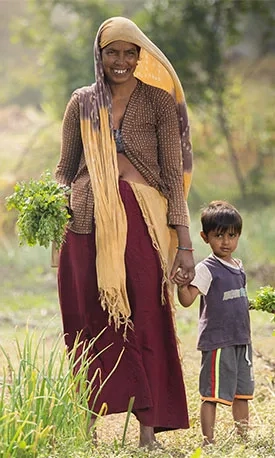
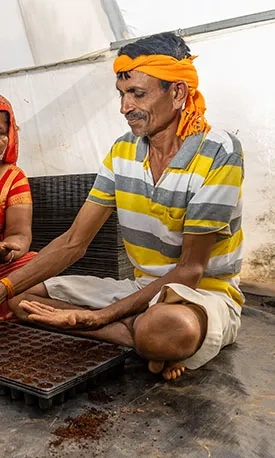
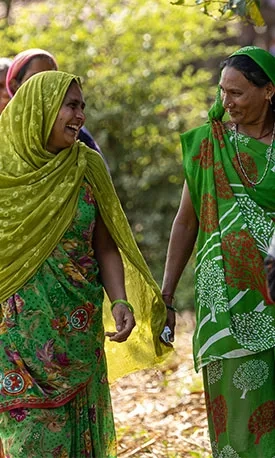
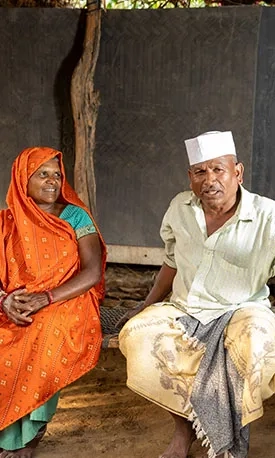
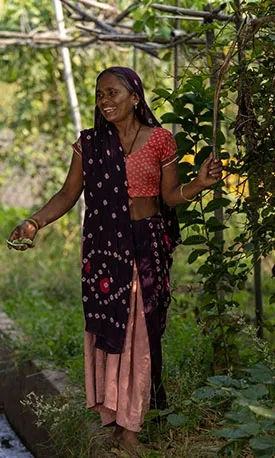
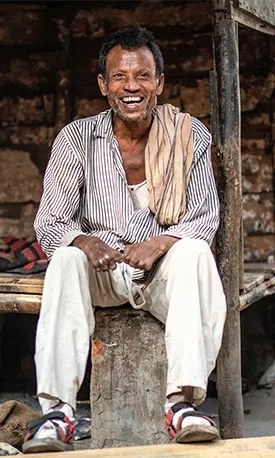
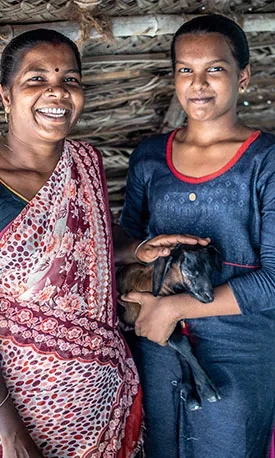
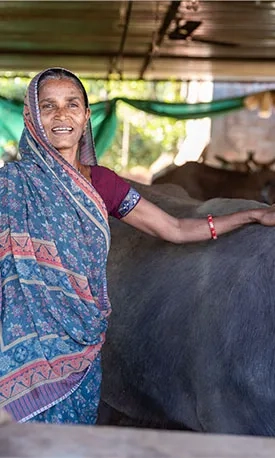
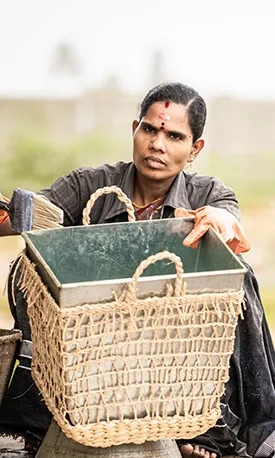
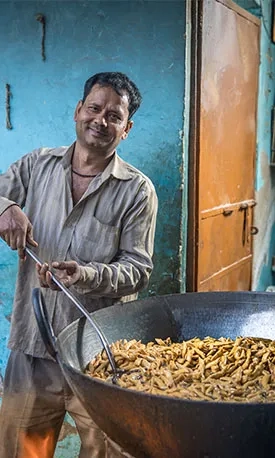
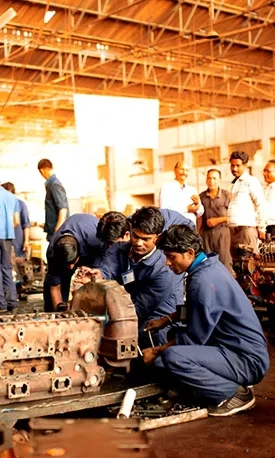
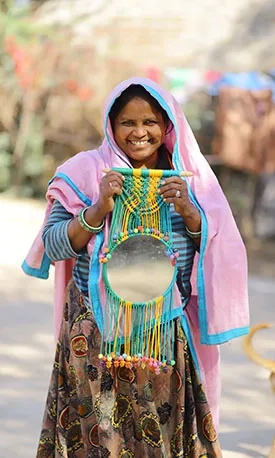
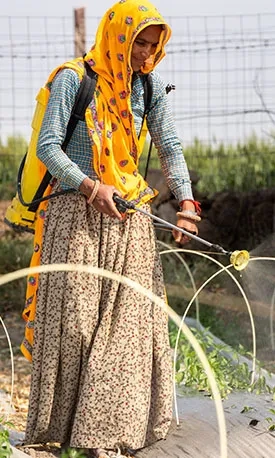
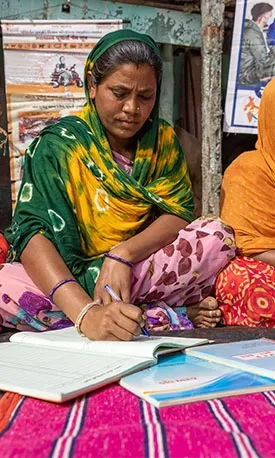
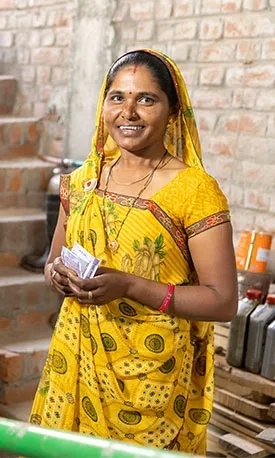
Authentic humanitarian photography for NGOs proves ground presence, humanizes data, and keeps readers engaged page after page. One good field shoot also gives you assets for donor decks, social media, and grant proposals, all at once.
Consistency matters too. Mismatched photo styles across sections make your report feel like two documents stitched together.
Every photo should pass three tests: is it real, is it dignified, does it serve the story on that page? And always caption with the person’s actual name. “A beneficiary from Jharkhand” is not a caption. It is an erasure.
Explore our humanitarian photography services or read our guide on hiring an NGO photographer in India.
#6. Keep Language Simple and Clear
The person reading your nonprofit annual report is not necessarily a development sector professional. They might be a first-time CSR manager, an individual donor, a journalist, or a government official. Write for all of them, which means write for the least specialised reader in the room.
Short sentences. Active voice. Concrete outcomes.” We trained 800 women in organic farming across 14 villages in Vidarbha” will always land harder than “capacity building initiatives were undertaken to enhance agricultural knowledge amongst rural women.”
Every piece of jargon narrows your audience. Whether you are putting together an annual report of NGOs in India or working through a CSR audit checklist in India, clear writing is not a style choice. It is a strategy. Explain sector terms in plain language. Clear writing is not a courtesy. It is what keeps your reader on the page.
#7. End with a Strong Closing
How you close the report determines what the reader does next.
A weak close, thanks everyone generically, and trails off. A strong close does three things:
- Shows where the organisation is heading next year.
- Name the donors, partners, and field teams who made the year possible.
- Gives the reader a clear reason to stay connected.
Write two or three clear goals for the coming year. Not vague statements. “We will continue to serve communities” is not a goal. Whether it is an NGO annual report or a CSR annual report, funders want to see an organisation that is learning, growing, and planning.
Acknowledge your donors, partners, and field teams by name. Then close with a clear next step, a funding invitation, a website link, or a QR code linking to a development sector film. Do not leave the reader with no path forward.
You spent a year doing the work. The last page of your report is where you ask the reader to join you for the next one.
Final Thoughts
Annual report design for NGOs and CSR teams in India has changed. It is no longer just a year-end document you file and forget. Donors read it before they reply to your email. CSR managers share it with their leadership before renewing a grant. Government reviewers check it before clearing your compliance status. If your report looks rushed, feels generic, or reads like a legal document, that is the impression it leaves. And first impressions in this sector are hard to recover from. A well-designed report tells your stakeholders one simple thing: this organisation means what it says. That alone can open doors that cold outreach never will.
Ready to Design an Annual Report That Actually Works?
If your annual report design checklist for NGOs is still a blank page, or your CSR annual report design in India reads more like a compliance document than a communication tool, that is worth fixing.
Expressive Life designs impact-driven annual reports for nonprofits and CSR initiatives across India, built around real field stories, ethical photography, and clear data. Not templates.
Get in touch and tell us about your work.
Looking for more guidance? Read our complete guide on the dos and don’ts of writing a nonprofit annual report, or explore how coffee table books can complement your annual report as a deeper impact communication tool.